 Skip to content

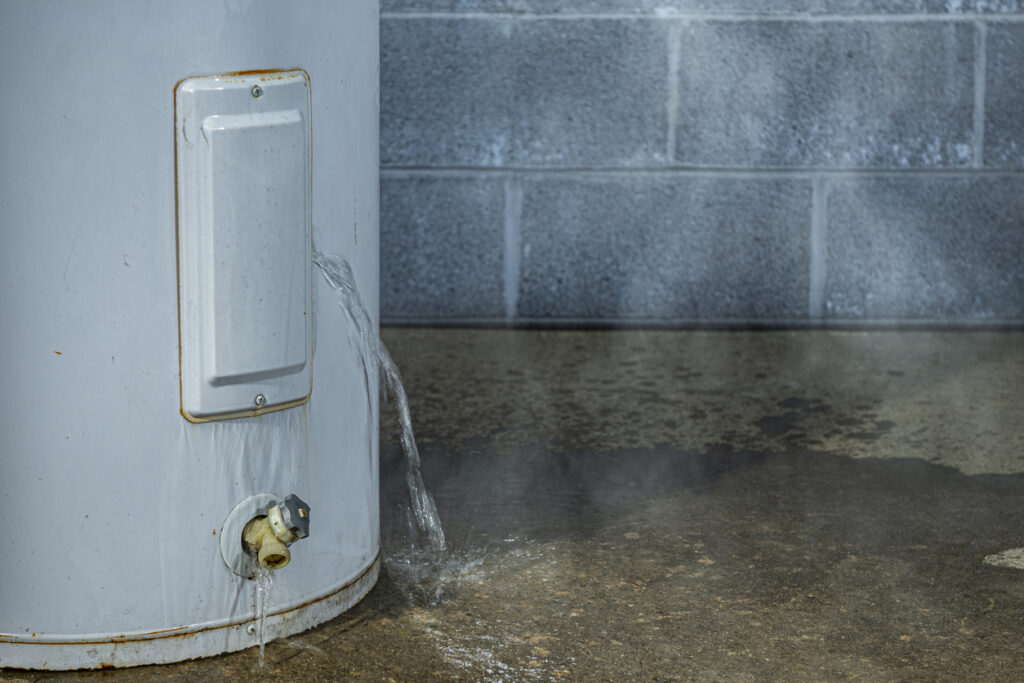
A leaking water heater is rarely something to ignore. It can point to anything from a loose fitting you can tighten yourself to a failing tank that needs full replacement before it causes water damage.
This guide covers what causes water heater leaks, which fixes are safe to try yourself, when to bring in a professional, and what replacement typically costs in the Dallas area.
Notice water pooling around your water heater? Schedule a same-day inspection with Infinity Texas Air before a small leak turns into a flooded utility closet.
What Causes a Water Heater to Leak?
A water heater leaks when a part inside the tank or its connected fittings fails, allowing water to escape instead of staying contained. The exact cause depends on where the leak is coming from.
Common causes include:
- A corroded tank: Over time, sediment and minerals wear through the tank’s interior lining, especially in areas with hard water like much of the Dallas–Fort Worth region.
- A faulty temperature and pressure (T&P) relief valve: This valve releases water when pressure inside the tank gets too high. A worn or failing valve can drip or leak continuously.
- Loose or damaged fittings: The inlet and outlet connections, along with the drain valve, can loosen over time or develop small cracks.
- Condensation: On cooler days, condensation can form on a gas water heater and pool at the base, mimicking a leak without an actual failure.
- Excess pressure buildup: High water pressure in the home can stress the tank and its fittings, leading to leaks even in a relatively new unit.
Identifying where the water is actually coming from is the first step, since a leak at the top of the tank (fittings, valve) is a very different repair than water pooling underneath it (corroded tank).
How to Fix a Leaking Water Heater
The right fix depends entirely on the leak’s source, and the first step is always to turn off power and water supply to the unit. For a gas water heater, turn the gas valve to “off.” For an electric unit, shut off the breaker.
- Locate the leak. Dry off the tank and fittings, then check again after a few minutes to see where new moisture appears.
- Tighten loose fittings. If the leak is coming from the inlet, outlet, or drain valve, try tightening the connection with a wrench.
- Replace the T&P valve if it’s dripping. This is a straightforward swap for anyone comfortable with basic plumbing, but shut off water and drain some pressure from the tank first.
- Check the drain valve. A leaking drain valve sometimes just needs a new washer or a replacement valve.
- Inspect the tank itself. If water is leaking from the tank body, not the fittings, the tank is corroded and needs to be replaced. You can’t patch or repair tanks.
If you’re not confident you can diagnose the source of the leak, have a plumber take a look before attempting any repair, since misdiagnosing a fitting issue as a tank issue (or the reverse) wastes time and money.
DIY Water Heater Repair: When It’s Safe and When It’s Not
DIY repair is safe for surface-level issues like a loose fitting or a failing T&P valve, but not safe for anything involving the gas line, electrical components, or the tank itself. Water heaters combine electricity or gas with pressurized hot water, which raises the stakes far beyond a typical drain clog.
Safe to DIY:
- Tightening a loose fitting or connection
- Replacing a drain valve or its washer
- Replacing a T&P relief valve (with water and power shut off first)
- Flushing sediment from the tank as routine maintenance
Not safe to DIY:
- Any repair involving the gas line or gas control valve
- Electrical repairs on an electric water heater’s heating elements or wiring
- Replacing the tank itself
- Repairs on a unit still under warranty, since DIY work can void it
If a repair requires draining and refilling the tank, shutting off gas or electrical supply, or opening any sealed component, it’s worth weighing the small cost of a service call against the risk of a mistake that causes water damage or a safety hazard.
When to Call a Professional Plumber For a Leaking Water Heater
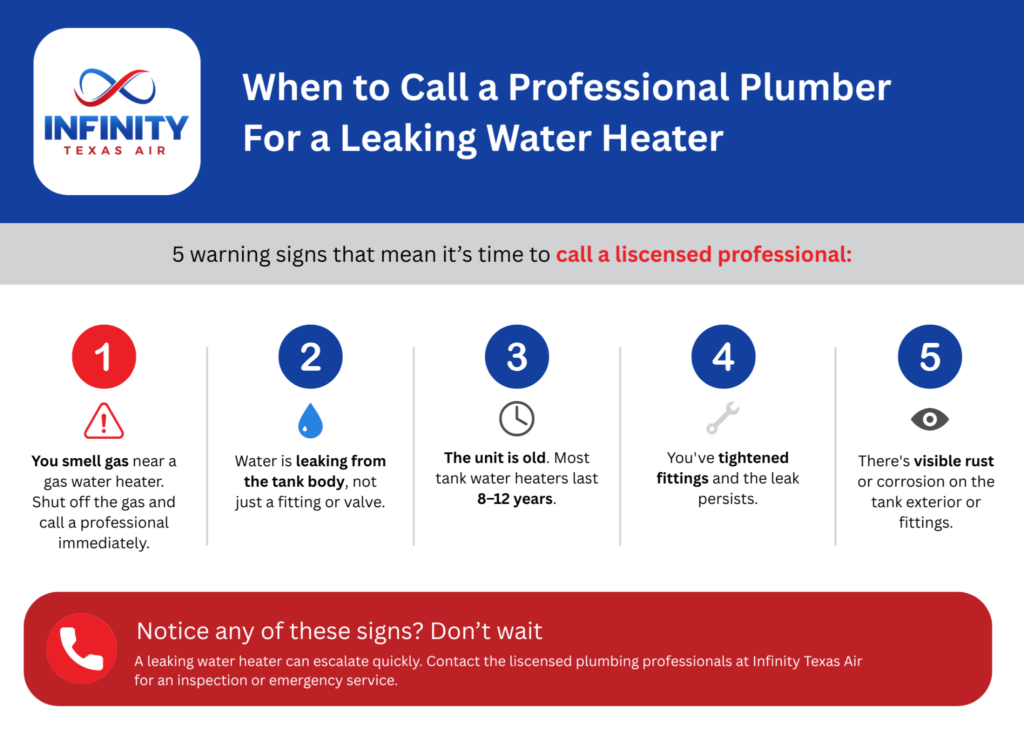
Call a plumber when the leak is coming from the tank itself, when you’re unsure of the cause, or when the water heater is more than eight years old. These situations carry a higher risk of injury, water damage, or a bigger repair bill if you handle them incorrectly.
Specific signs to call a professional right away:
- Water is leaking from the tank body, not just a fitting or valve. This means the tank is failing and needs to be replaced.
- You smell gas near a gas water heater. Shut off the gas supply and call a professional immediately.
- The unit is old. Most tank water heaters last 8-12 years. A leak in a unit near or past that age usually signals it’s time to replace it rather than repair it.
- You’ve tightened fittings, and the leak persists. A leak that continues after basic troubleshooting points to a deeper issue.
- There’s visible rust or corrosion on the tank exterior or fittings.
Infinity Texas Air Tip: Never attempt to repair the tank itself. If water is coming from the tank body rather than a valve or fitting, the tank has already failed structurally.
Ready to get your water heater fixed without the upfront cost? Explore financing options with Infinity Texas Air and get started in minutes.
How Much Does It Cost to Replace a Water Heater in Dallas, TX?
Replacing a standard tank water heater, depending on whether it’s electric or gas, typically costs between $1,000 and $2,800, while tankless units can run anywhere from $2,500 to $10,000+ because the installation is more involved. Exact pricing depends on the unit’s size, fuel type, and any additional work needed, like updating venting or electrical connections.
Rough pricing breakdown:
| Water Heater Type | Typical Installation Cost |
| Standard tank (electric) | $1,000–$1,800 |
| Standard tank (gas) | $1,200–$2,800 |
| Tankless (electric) | $2,500–$4,000 |
| Tankless (gas) | $3,000–$10,000+ |
Costs rise if the installation requires code updates, such as adding an expansion tank or upgrading venting to meet current standards. Replacing an aging unit before it fails completely also tends to cost less overall, since a sudden failure can add water damage repair to the bill.
Can You Finance Plumbing Work?
Yes, you can finance plumbing work through flexible payment plans that break a larger repair or replacement into manageable monthly payments. Infinity Texas Air offers financing through GoodLeap, giving Dallas homeowners a way to move forward with a repair or new water heater without paying the full cost upfront.
Why financing makes sense:
- Spreads the cost of a water heater replacement over time instead of one large payment
- Makes it easier to choose the right unit for your home rather than the cheapest available option
- Lets you replace a failing water heater right away instead of waiting to save up
What financing with Infinity Texas Air offers:
- A quick application process with a soft credit check that won’t affect your credit score
- Flexible plans designed to fit different budgets
- The ability to move forward with a repair or replacement without financial strain
Why Dallas Homeowners Choose Infinity Texas Air
Dallas homeowners choose Infinity Texas Air because of our dependable service, honest pricing, and deep understanding of the plumbing challenges common to North Texas homes. We approach every job the way we’d want a plumber to treat our own house.
What Sets Us Apart:
- Local expertise: Years of experience with Dallas-area water quality, foundation issues, and the plumbing quirks of both older and newer homes
- Transparent pricing: Free estimates and clear costs before work begins, with no hidden fees
- Licensed and experienced technicians: Professionals trained to current Texas plumbing codes on every job
- Flexible financing: Payment options that make water heater repair and replacement accessible for any budget
- Prompt, reliable service: Fast response times for both routine repairs and plumbing emergencies
Our Commitment to Dallas Homeowners:
- Honest recommendations, never unnecessary upsells
- Clean, respectful work in your home
- Long-term solutions built to last, not quick fixes that lead to repeat problems
Dealing with a leaking water heater? Contact Infinity Texas Air for a free estimate and fast, reliable service across Dallas.
FAQs
Is it safe to keep using a water heater that’s leaking a little?
It depends on the source. A minor drip from a loose fitting can often wait a day or two for a repair, but any leak from the tank body itself means the unit could fail completely at any time and should be addressed right away.
Can a leaking water heater cause water damage to my home?
Yes. Even a small, steady leak can damage flooring, drywall, and subfloor over time, and a sudden tank failure can release the tank’s entire contents at once.
How long do water heaters usually last?
Standard tank water heaters typically last 8-12 years, while tankless units can last 15–20 years with proper maintenance.
Should I repair or replace an older leaking water heater?
If the unit is more than 8 years old and the leak is coming from the tank itself, replacement is almost always the better choice, since the tank has already failed structurally.